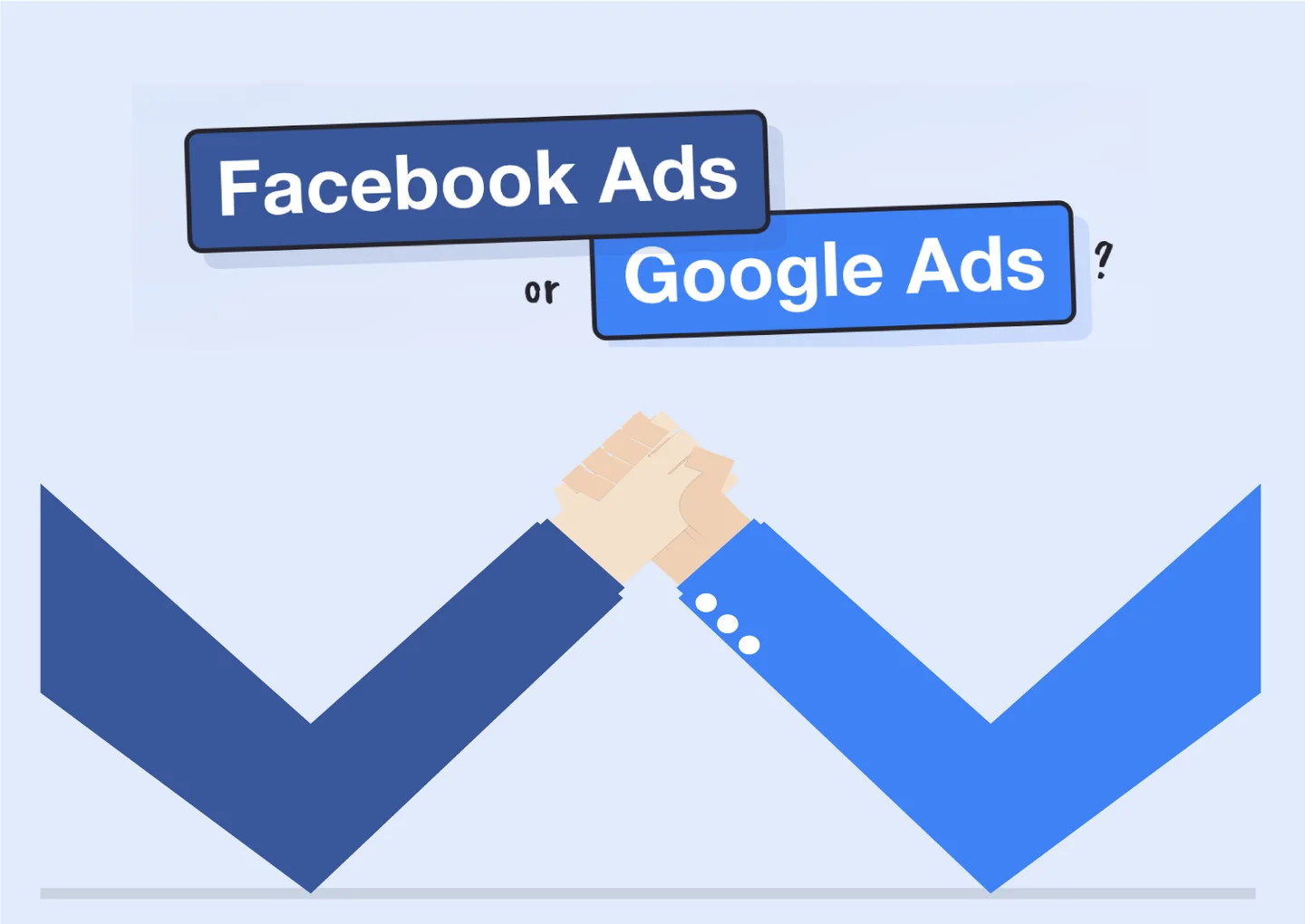
In the digital age, online advertising is not just a tool, but a necessity for every business, that wants to grow. Among the many platforms for paid campaigns, two remain leading - Google Ads and Facebook Ads. And while both offer strong capabilities, Google is often the more effective choice for companies offering specific services.
Main difference - Intent vs Interest
Google Ads - user intent
Google Ads shows ads to people who are actively searching for a service or product. For example, if someone searches for "air conditioner cleaning Sofia", that is a direct signal of need. At that moment, they are ready to act - call, inquiry, purchase.
Facebook Ads - user interest
Facebook advertises based on interests and behavior, not search. A person may see an ad for the same service, but while simply scrolling, without a specific intent. This makes the platform more suitable for branding and awareness building, not so much for direct sales.
Why Google Ads delivers higher return on investment
1. Users already know what they want
When a person types a search query, they are in the final stage of the buying process. This is the ideal moment to show them the solution they are looking for.
2. Higher conversion rate
The average conversion rate in Google Ads is around 3.75%, while on Facebook it is 0.77%. The reason is clear: on Google, users are searching, while on Facebook they are just browsing.
3. Precise keyword targeting
Google lets you show ads only to people searching for specific phrases. This means you do not waste money on people who are not interested.
4. Better control over the budget
Google's system is built on CPC (cost-per-click) - you pay only for actual interaction. This allows detailed cost control and higher efficiency.
5. Opportunity for global reach
Google processes over 3.5 billion searches per day, giving access to almost every market in the world.
When Facebook Still Has an Advantage
Facebook Ads can be the better choice when your goal is:
- Building a brand and recognition
- Creating a community around a product or idea
- Visual impact through video and creative formats
- Audience testing, before moving on to more serious campaigns in Google
Example from practice
Successful Google Campaign
An appliance repair company in Plovdiv used keywords such as "washing machine repair Plovdiv" and "refrigerator service Plovdiv".
- Result: +60% calls and +45% revenue growth for 3 months.
Successful Facebook Campaign
Yoga studio targeted women aged 25-45 with an interest in health and meditation.
- Result: +35% sign-ups and higher brand awareness.
Data and statistics
- CTR (click-through rate): Google - 2%, Facebook - 0.9%
- CPC (cost per click): Google - $2.69, Facebook - $1.72
- Conversions: Google - 3.75%, Facebook - 0.77%
Although Facebook has a lower cost per click, Google delivers more real customers at a lower cost per acquisition (CPA).
Integration and analysis
Google Ads integrates easily with:
- Google Analytics - to track behavior and conversions
- Google My Business - for local services
- Google Tag Manager - for automated data collection
This creates a complete measurement and optimization system that most social platforms cannot match.
Limitations of Facebook Ads
- Users are not in a "buying mode"
- A high level of ad blindness
- Limited reach for specific services, especially B2B
- More difficult to measure real ROI results
SEO and long-term benefit
With Google Ads, you do not just pay for traffic, you create a foundation for organic growth through SEO. Optimized pages can keep their positions even after the ads are turned off - something Facebook cannot offer.
Conclusion
Google Ads is a platform of intent - it connects people who are looking for a solution with those who offer it. Facebook is a platform of inspiration, where people discover new ideas, but not necessarily buy.
For companies offering services with clear search intent, Google is undoubtedly the more effective choice.
However, the best approach is the combination - use Google to attract customers with intent, and Facebook to build trust and loyalty.
Would you like a professional advertising and optimization strategy? Request a free consultation and we will show you how to build a campaign that does not just attract clicks, but brings real customers.