Try ClickShield free for 15 days
Protect your Google Ads from fake clicks, bots, and malicious competitors with the best prevention system.
If you manage Google Ads campaigns long enough, there comes a point when you start to feel a "leak." The budget keeps going, clicks keep piling up, but real inquiries do not move proportionally. And when you open the details, you see the familiar pattern: series of suspicious visits, strange behavioral patterns, repeated clicks without real interest.
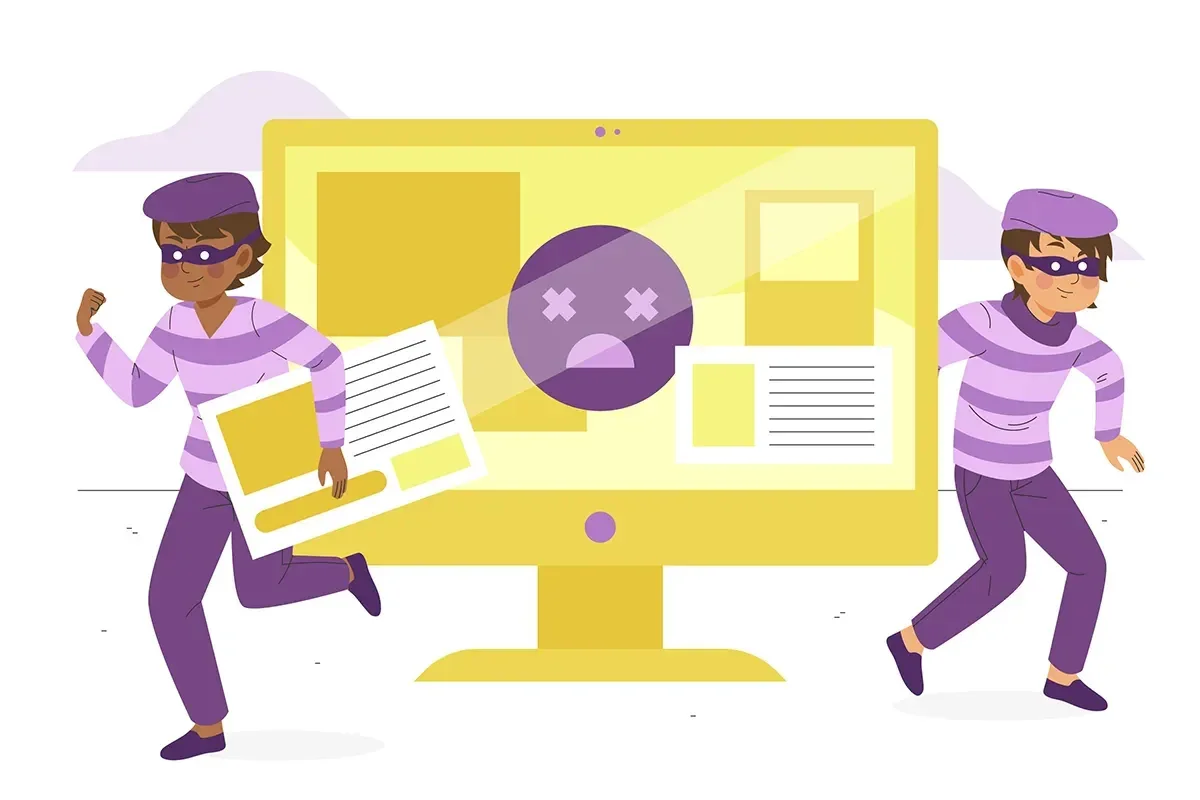
This is the biggest practical drawback of Google Ads in the real world: you do not pay only for potential customers. You also pay for noise. Sometimes random clicks, sometimes competitors, sometimes bots and organized "click traffic." Google calls this invalid traffic / invalid clicks - clicks and impressions that are not the result of real interest, including fraudulent, duplicate, or accidental interactions.
And yes - Google does have protections. Complex systems, filters, models that are supposed to protect you and, in principle, should prevent you from being charged for invalid clicks. But in practice, there is a difference between "there is protection" and "the protection is sufficient for your business, your market, and your competitors."
This is where we decided to do something different.
The problem is not that Google does not try. The problem is that automation has limits
Google works with a massive amount of data and has to make decisions in real time. That is a strength, but also a limitation. Automated systems can catch many obvious patterns, but:
- there are bots that imitate human behavior (time on page, scrolling, movements)
- there is "gray" traffic that is not 100% bot, but not a real customer either
- there are competitors who click "smartly" (rarely, sporadically, across different devices/networks)
- there are click farms and schemes that are becoming quieter and harder to detect
In short: automation is necessary, but not enough when you are aiming for maximum precision and you have a real financial incentive to cut every irrelevant click.
In the industry, the topic is growing and the risks are becoming more complex - including through "invisible" networks of devices and apps that generate fake interactions at scale.
What we did: a hybrid system (automation + human control)
Most solutions on the market are "100% automatic": they block, filter, and flag. That sounds good until you get to the most important thing: the mistakes.
- If you block too aggressively, you cut real customers.
- If you block too softly, you let the leak keep running.
- If you rely on only one signal (IP, device, frequency), you will be outmaneuvered.
That is why we took a different approach: we let automation handle the heavy lifting, but we kept the human factor for the final judgment, when the stakes are high.
What this looks like in practice
1) Automatic anomaly detection
The system monitors patterns such as:
- unusual click frequency without conversions
- repeated sessions with identical behavior
- suspicious sources/placements (especially in Display/Performance Max)
- odd combinations: many clicks, zero engagement, minimal time, identical paths
2) Enrichment with data that Google Ads on its own does not tell clearly enough
We combine signals from:
- Google Ads (campaigns/keywords/placements/times/devices)
- GA4 (engagement, paths, events)
- server-side logic/server logs (when applicable)
- real business signals (who became a lead, who was fake, which forms are spam)
3) Human validation of the "edge cases"
This is the most important part. Automation flags, but a person:
- checks the context (campaign, offer, seasonality, competition)
- compares it with the customer's normal profile
- looks for an explanation before "cutting" it
This helps us avoid the typical mistake of automated solutions: punishing a successful campaign just because it had a spike.
4) Action: we eliminate fake clicks without hurting sales
When we have enough confidence, we apply measures such as:
- exclusions (placement exclusions / app exclusions when needed)
- adjustments by audience, locations, schedule
- stricter traffic qualification through campaign structure
- protection of forms and conversion points (so you do not count spam as a "success")
The goal is not just "fewer clicks." The goal is cleaner data and higher real return.
The second big breakthrough: we do not just stop the leak, we look for cost recovery
This is the part that many advertisers do not use correctly at all.
Google sometimes itself credits invalid interactions as billing adjustments (usually you will see them as "Invalid clicks/Invalid activity" in Billing/Summary).
But there is another scenario: when you believe the automated systems missed it and you have arguments, you can submit a manual request for investigation to the Click Quality team. That is exactly what we do - in a structured way and with evidence.
Important note: the community and documentation mention that when adjustments are made, they are usually in the form of advertising credits (not "cash refunds").
What we send to Google (and why it matters)
A manual request has no chance if it is just "someone is clicking me." That is why we prepare a package that speaks the language of the investigation:
- periods and campaigns with anomalies
- specific patterns (time windows, devices, locations)
- "before/after" comparison
- evidence from analytics and real business results
When you submit well-structured information, your chances of being heard are higher. Not because Google is "easy", but because you save it time and give it a clear trail.
How you know you have a fake click problem
Here are a few signals that almost always surface in real accounts:
- CTR rises, but conversions do not move (or drop)
- Traffic "spikes" at odd hours
- The campaign looks active, but the sales team says: "empty inquiries"
- Many clicks from Display/app placements with zero result
- Repeated visits with the same paths and minimal engagement
- Many "conversions" that are actually spam (if your tracking is weak)
If you rely only on the Google Ads interface, you often see the symptom but not the cause. That is why the hybrid approach is so powerful: you collect signals from several places and verify their logic in the real business.
Why this is the "biggest drawback" and why it is worth removing
Because fake clicks do three things at once:
- Spend your budget
- Contaminate optimization data
- Make the algorithm learn from the wrong signals
And this is critical: when the data is contaminated, optimization becomes "by inertia." Even if you have a good specialist, decisions start to rely on statistics that are no longer clean.
Google has protection mechanisms and describes a multi-layered approach against invalid traffic, but the very fact that there is a process for manual investigations and adjustments shows the reality: sometimes automation does not catch everything in time.
What the business gets as a result
When the system is set up correctly, the effect is not "magic" but a visible change in four directions:
- more real inquiries with the same budget
- more stable metrics (fewer unexplained spikes)
- more accurate optimization data (campaigns learn more cleanly)
- reporting: clarity on where the problems were and what was done
And yes - sometimes there is also an additional effect: adjustments/credits after an investigation, when there is a valid basis and a well-prepared signal to Google.
Final words: we are not chasing "perfect automation", but the perfect result
The easiest thing is to install software and believe everything is fine. The most expensive thing is to do that and not realize that real customers were cut off or that the leak is still happening, just more quietly.
That is why we removed the biggest drawback of Google Ads campaigns in a way that works in the real world:
automation for scale + human precision for control + a recovery process when justified.