Introduction
A chatbot is no longer just an addition to a website. For many businesses, it is the first contact with a potential customer - the place where someone asks a question, checks whether the service is suitable for them, looks for a quick answer, or simply wants to know whether there is a real team behind the website. The problem is that not every chatbot does the same job. One can be useful for hotel bookings, another for an online store, a third for technical support, and a fourth for consultations and collecting inquiries. That is why the choice should not start with which system looks the most modern, but with a much more practical question: what kind of conversation should this chatbot have instead of you?
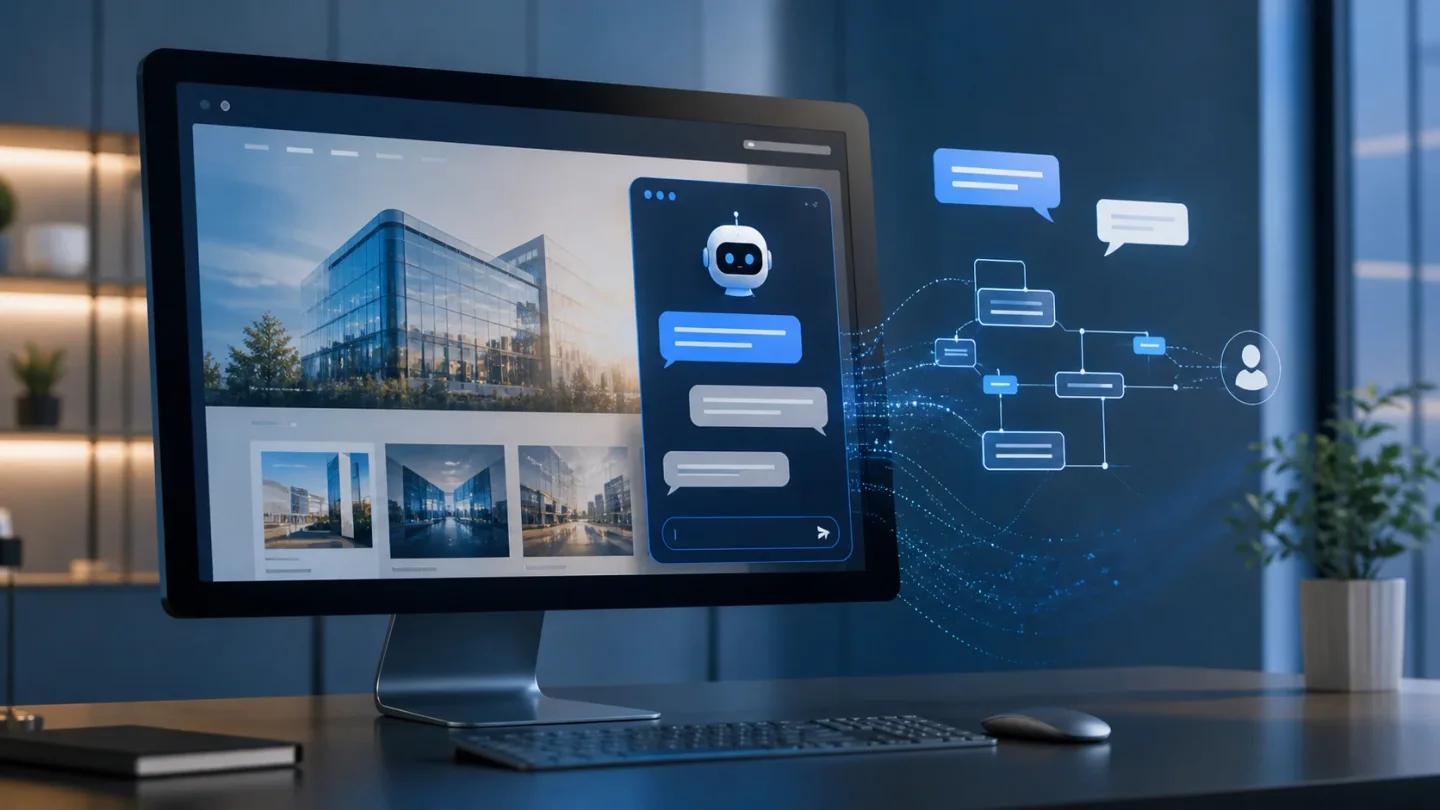
When planning chatbot development, the most important thing is not just to add a chat window to the website, but to build logic that understands the business, the content, customer questions, and the moments when it is better for a person to step in.
What is the real role of the chatbot
Before you choose a specific solution, you need to be clear about what you expect from it. A chatbot can be just a helper for quick questions, but it can also be a serious tool for support, sales, filtering inquiries, and collecting useful information.
In a small business, it often helps with the most frequently asked questions - opening hours, services, prices, address, deadlines, ordering method. On larger websites, its role can be more complex: recognizing the customer's intent, directing them to the right service, collecting inquiry details, or handing the conversation over to the team when the topic requires human involvement.
This is also why AI chatbots are evolving so quickly in customer service. IBM describes modern AI chatbots as systems that can automate communication across websites, mobile apps, SMS, and social channels, delivering faster and more consistent answers.
Regular chatbot or AI chatbot
One of the first differences you need to understand is the difference between a standard chatbot and an AI chatbot.
A regular chatbot works with predefined scenarios. It is suitable when the questions are simple and predictable. For example: 'Where are you located?', 'What are your opening hours?', 'How do I place an order?'.
The AI chatbot is more flexible. It can understand free-form text, recognize context, and respond more naturally. This matters because real users rarely ask in an ideal way. One person may write “How much does the service cost?”, another “I have a website, but it doesn’t bring me clients,” and a third “I want something similar, but I’m not sure exactly what I need.”
A well-configured AI chatbot does not simply return a prepared answer. It can ask a clarifying question, organize information, and help the user reach the next step.
The most important thing is how it is trained
A chatbot does not become useful just because it uses artificial intelligence. If it does not have the right information, clear instructions, and control over its answers, it may sound confident but be inaccurate.
A well-built chatbot should know the website content, the services, the limitations, how things work, frequently asked questions, and the situations in which it should not make up an answer.
There are several important questions here:
- Can the bot be trained with the website content?
- Can specific behavior instructions be added?
- Can it say “I don’t know” when there is no reliable information?
- Can it direct the user to a person in more complex cases?
- Can it be updated when you change prices, services, or terms?
If the answer to these questions is unclear, there is a risk that the chatbot will become a source of confusion instead of a helpful assistant.
A good chatbot does not talk a lot; it talks accurately
Many businesses are impressed when an AI chatbot writes long and “human” answers. But that is not always an advantage. In a real environment, the user is not looking for literary text. They want a specific, clear, and useful answer.
If they ask about a deadline, they should get a deadline or a condition. If they ask about a price, they should understand what it depends on. If they ask whether a service is suitable for them, the bot should ask the right clarifying questions.
Overly general answers create the feeling that the bot is “talking” but not helping. And that is one of the most common problems with poorly configured chatbots.
The chatbot should ask questions
A weak chatbot waits for the user to explain everything correctly. A good chatbot helps them do it.
If someone writes “I want a website,” that is not enough information. A useful bot would ask whether they mean a corporate website, an online store, a platform, a booking system, or a redesign of an existing website.
This is exactly where the chatbot starts to deliver real value. It does not just respond; it structures the conversation. That way the team gets clearer inquiries, and the client does not feel lost.
Be careful with ready-made solutions
Ready-made chatbot platforms can be convenient, especially if the needs are basic. But for a more serious business, limitations often appear.
Some solutions look good visually but do not allow enough control over behavior. Others have good AI logic but poor integration with the website. Some work well in English but are not natural enough in Bulgarian. Others are suitable for support, but not for sales or advisory conversations.
That is why the choice should not be based only on price or popularity. What matters more is whether the specific solution can be adapted to your business.
Website integration is key
The chatbot should look like part of the website, not like a foreign element added in a hurry.
That means it should match the design, colors, mobile behavior, loading speed, and the other elements on the pages. If the bot covers important buttons, opens too aggressively, slows down the site, or interferes with navigation, it starts to do harm.
On WordPress websites this is especially important, because there is often a combination of builders, caching plugins, forms, pop-up elements, analytics, and translators. The chatbot must work reliably in this environment without creating conflicts.
Check whether it has conversation history
Conversation history is very important. Without it, the chatbot remains only a tool for immediate answers. With it, it becomes a source of information for the business.
From conversations, you can learn what people ask most often, which services are not explained clearly enough, where hesitation appears, which objections repeat, and in which moments the bot does not perform well.
This helps not only improve the chatbot, but also improve the website itself - texts, FAQ sections, offers, product pages, and the inquiry process.
Human intervention should not be missing
Even the best AI chatbot should not be left without the possibility of human intervention. There are situations in which the right behavior is not to answer at any cost, but to direct the conversation to a person.
This applies to custom offers, complaints, complex technical cases, sensitive topics, financial questions, or situations where there is not enough information.
A professional chatbot should have boundaries. That does not make it weaker. On the contrary, it makes it more reliable.
Technology also matters
You do not need to know all the technical details, but it is important to know whether the solution is built on current and supported technology.
OpenAI, for example, is developing the Responses API as a unified interface for more complex AI applications, with support for tools, multi-step conversations, and multimodal capabilities. This is an important direction because chatbots are no longer just systems for text replies; they can be part of broader processes - search, analysis, information processing, and connection with other tools.
Reuters also reported that OpenAI presents the Responses API as a new tool for building more advanced AI agents, with older approaches gradually being phased out.
For business, this means one thing: do not choose a solution that is made only to work today. Choose one that can evolve.
How to tell whether the chatbot is good
A good chatbot is recognized not by how impressive it looks, but by how it behaves in a real conversation.
It should understand the question, answer briefly and clearly, not make up information, ask meaningful clarifying questions, and guide the user to the next step.
If the bot constantly gives general answers, repeats the same phrases, does not understand the context, or tries to answer everything, it is probably not configured well enough.
A practical test is to ask it real questions that your clients would ask. Not ideal questions, but the kind people actually write - with incomplete information, mistakes, hesitation, and different ways of expressing themselves.
Price: the cheap solution often ends up being expensive
When it comes to chatbots, price should not be viewed only as a monthly subscription. What matters is what the solution includes.
It matters whether the price includes initial setup, training, website integration, visual configuration, maintenance, conversation analysis, improvements, and AI model costs.
A cheap bot that is not well trained and not maintained can create more problems than benefits. Conversely, a better-built chatbot can save the team time, improve service, and help generate more qualified inquiries.
Zendesk reports growing interest in AI in customer service and notes that businesses increasingly see AI agents as part of the customer experience, not just as a support tool.
What kind of chatbot to choose depending on the type of website
For a corporate website, it is important that the bot explains the services clearly, answers basic questions, and leads to an inquiry.
For an online store, it should help with products, delivery, returns, warranties, stock availability, and selection.
For a hotel or tourism business, it is important that it answers questions about bookings, prices, accommodation, amenities, location, and terms.
For medical, legal, or financial services, the bot should be very careful, with clear limitations and guidance to a specialist.
For B2B services, the most important things are qualifying the inquiry, understanding the need, and collecting enough information for follow-up contact.
The best chatbot is the one that fits the business
There is no universal best chatbot. There is the most suitable chatbot for the specific website, the specific business, and the specific clients.
If you have a small website with a few services, a lighter solution may be enough. If you have a complex structure, a lot of content, different types of clients, and a need for more serious communication, then it is better to think about a customized AI chatbot.
What matters is that the solution is clear, controllable, and useful. Not just answering, but helping.
Conclusion
Choosing a chatbot is not a technical detail, but a business decision. A well-built chatbot can improve communication, reduce repetitive questions, help users orient themselves more quickly, and give the team higher-quality inquiries.
The most important thing is not to choose blindly. Start with the goal, then think about the technology. Define what conversations the bot should handle, what information it should know, when it should ask questions, and when it should direct the user to a person.
A good chatbot is not the one that talks the most. A good chatbot is the one that understands enough, answers accurately, and helps the user take the next step.